
Blog
What’s the Difference Between Roadtrip Gummies and Other Brands?
Nov
Walk into any shop or scroll any website and you’ll find a wall of mushroom gummies. The packaging all looks fun, the claims all sound confident, and the prices are all over the place. So when someone asks what separates roadtrip gummies from every other brand, it’s a fair question, and a harder one to answer than it should be.
Here’s how we’d compare roadtrip mushroom gummies to other brands: what to look at, which differences matter, and which are just marketing. We’ll be honest about what we can back up and what you’ll need to verify yourself.
Start With the Ingredient, Not the Brand Name
The biggest difference between mushroom gummies isn’t the logo. It’s what’s inside. Some brands use functional mushroom extracts like lion’s mane or reishi. Others use mushrooms with a more noticeable effect on how you feel. Two products with similar packaging can be completely different things.
So the first question to ask of any brand, including this one, is simple: which mushroom, and how much per gummy? [Insert: the specific species/ingredient in Roadtrip gummies, the amount per piece, and whether it’s an extract or whole-mushroom powder, taken directly from your label.] If you can’t compare ingredient against ingredient, you’re not comparing products. You’re comparing branding.
Fruiting Body, Mycelium, or Extract?
This one trips up even experienced shoppers. Some mushroom products use the fruiting body, which is the part of the mushroom you’d recognize. Others use mycelium grown on grain, which can contain leftover starch. Some use concentrated extracts, and some just use plain powder.
They aren’t interchangeable, and a label that says “mushroom blend” without saying which is hiding useful information. When you’re comparing roadtrip gummies against other brands, check that each one tells you the part of the mushroom used and how it’s processed. [Insert: your sourcing and extraction details.]
Lab Testing: The Real Dividing Line

If there’s one place brands genuinely differ, it’s proof. The FDA doesn’t approve gummies or supplements before they hit shelves, so independent testing is the closest thing to a safety net.
When comparing, ask each brand:
- Do they publish a certificate of analysis (COA) from an independent lab?
- Does it match the batch number printed on your package?
- Does it cover contaminants like heavy metals, pesticides, and microbes, not just potency?
- Can you find it without emailing customer service?
Some brands do all four. Many do none. [Insert: how Roadtrip handles testing, with the lab name and a link to your COAs.] This is the single easiest way to separate a transparent brand from a risky one, so don’t skip it.
Transparency on the Label
Pick up two bottles side by side and the difference is often obvious. A good label tells you the ingredient, the amount per gummy, the number of servings, a batch or lot number, and clear warnings. A weaker label gives you a proprietary blend, a total milligram figure that tells you nothing about the actual ingredients, and a lot of lifestyle imagery.
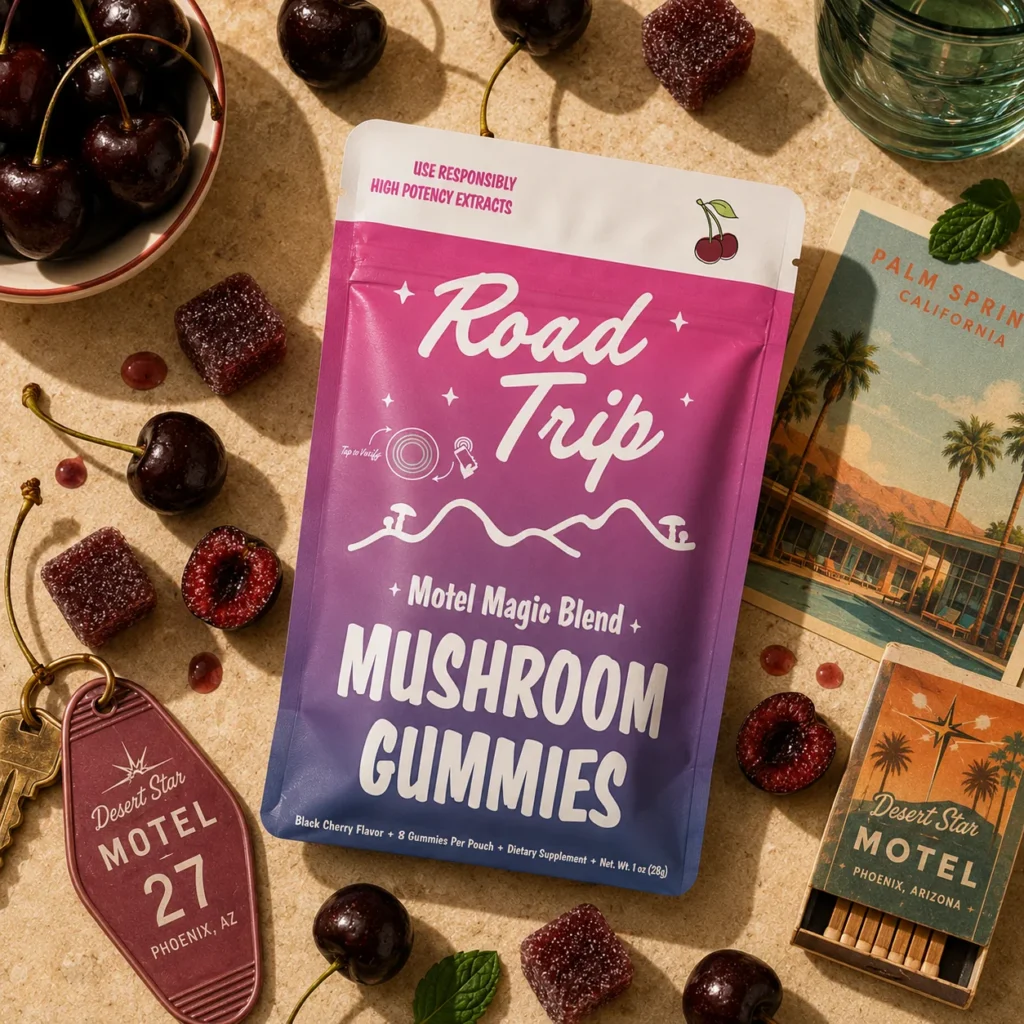
When we looked at the packaging on roadtrip mushroom gummies, we noted [Insert: what you found, such as amounts per piece, batch number, warnings, allergen info]. Add your own first-hand notes here. Readers can tell when someone has actually handled the product.
Price vs. Value
A cheaper pack isn’t always the better deal, and a pricey one isn’t always the better product. The fair way to compare is cost per serving, adjusted for the amount in each gummy.
Here’s a simple method: divide the pack price by the number of gummies, then compare how much active ingredient each one actually contains. A $20 pack with a tiny amount per piece can cost more per effective serving than a $35 pack with a meaningful amount. [Insert: current Roadtrip pricing, pack sizes, and any subscription or bulk options.]
Also look at the extras, like shipping costs, return policy, and whether the brand answers questions when you ask.
Taste, Texture, and Flavor
Let’s be honest: this matters. Mushrooms can taste earthy and a bit bitter, and brands handle that very differently. Some lean on heavy sweeteners and artificial flavors. Others keep ingredients simpler, and the flavor shows it.
Check for sugar content, sweetener type, and whether the gummies are vegan, gluten-free, or free of major allergens if that matters to you. [Insert: flavors, texture notes, and dietary details for Roadtrip gummies, plus your honest impression of how they taste.]
Legal Status and Where They Ship
This is a difference people forget about. Rules for mushroom products vary by state and keep changing, and not every brand ships everywhere. A responsible company is clear about where it can legally sell and doesn’t leave it to you to figure out after checkout.
Before buying from any brand, check your state’s current rules and the seller’s shipping restrictions. [Insert: Roadtrip’s shipping restrictions and legality page.] If a seller is vague about this, that tells you something.
Beware of Lookalikes
Because mushroom gummies are popular, copycats and counterfeits are common. Packaging gets imitated, and marketplace sellers can list products that aren’t what they claim. Whichever brand you choose, buy from the official website or a verified retailer so you know what you’re getting.
Safety Comes First, Whatever the Brand
No brand changes the basics. Start with the smallest serving, give it plenty of time before taking more, and don’t drive or operate machinery after taking mushroom gummies that may affect alertness or perception. Skip them if you’re pregnant or breastfeeding, under 18, or taking prescription medication, and talk to a doctor if you have any health concerns. Keep them away from children and pets, and don’t assume any product will pass a workplace drug test.
So, What Makes Roadtrip Gummies Different?
Here’s our honest take. The differences that matter are the ones you can check: the ingredient and amount, the testing, the label, the price per serving, and the seller’s openness about legality. [Insert 2-3 genuine, verifiable differentiators for Roadtrip gummies, such as third-party testing, ingredient sourcing, flavor options, or return policy.]
The differences that don’t matter are slogans, flashy packaging, and bold claims with nothing behind them. Hold every brand to the same standard, ours included, and you’ll end up with a product you can trust.
